
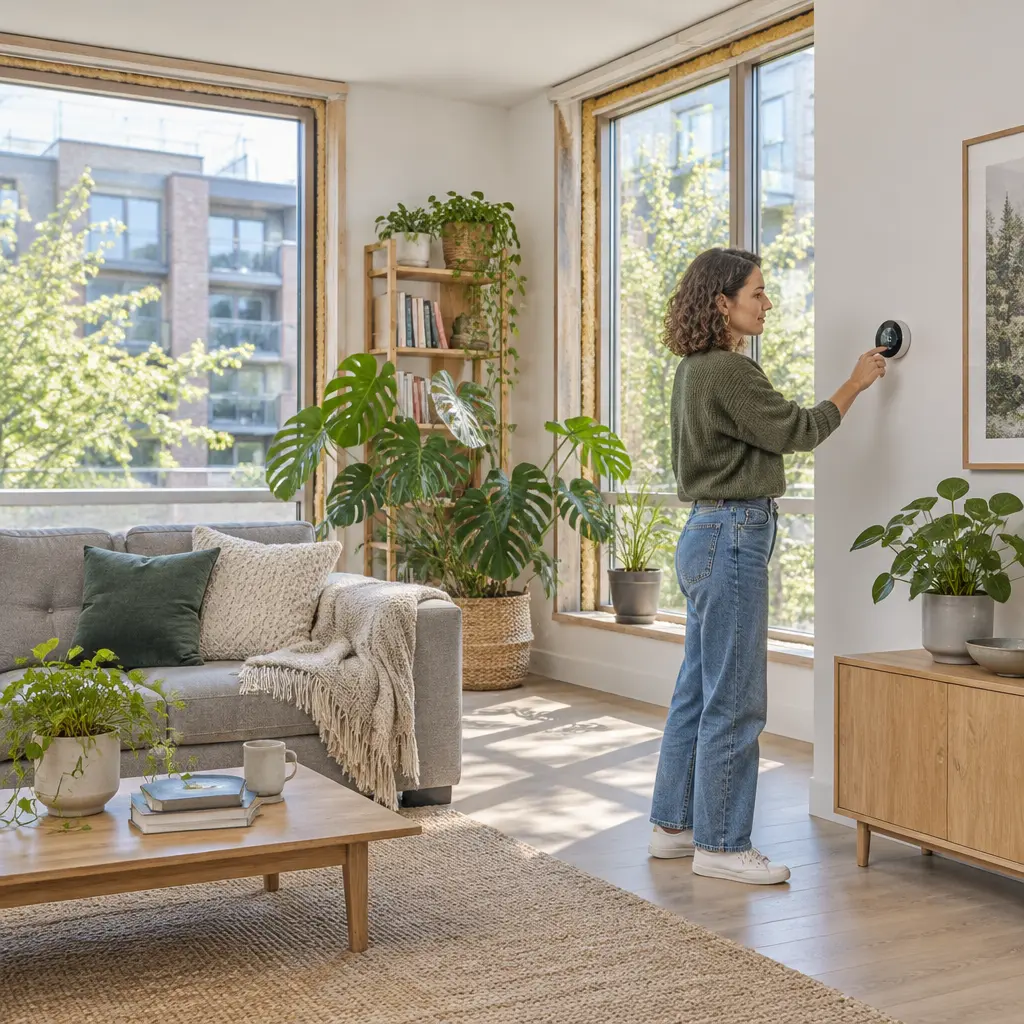
Green rental apartments are homes designed or upgraded to use less energy and water, reduce environmental impacts, and support healthier indoor conditions. Demand is growing as renters face high utility costs, climate-related risks, and greater interest in sustainable living. The U.S. Energy Information Administration reported that residential buildings accounted for about 21% of U.S. energy consumption in 2022, while the U.S. Environmental Protection Agency estimates that buildings contribute roughly 30% of U.S. greenhouse-gas emissions when direct and indirect emissions are considered. Efficient apartments can help address these impacts while offering practical benefits: lower energy bills, improved comfort, and, in some cases, better resilience and access to transit. This article examines what makes an apartment green, why renters and owners are responding, how the benefits are measured, and what real-world examples reveal.
Green rental apartments combine efficiency, health, and lower environmental impact
A green rental apartment is a dwelling whose design, construction, or operation reduces resource use and environmental harm while maintaining safe, comfortable living conditions. There is no single universal definition: programs such as LEED, ENERGY STAR, and Enterprise Green Communities use different standards, but commonly assess energy and water efficiency, materials, indoor environmental quality, and site or transportation impacts.
Demand is increasing because these features connect environmental goals with everyday household concerns. The U.S. Department of Energy notes that efficient buildings can lower energy consumption, while the U.S. Environmental Protection Agency’s ENERGY STAR program explains that certified homes are designed to use less energy than comparable conventional homes. For renters, the appeal is especially tangible when efficiency improvements reduce monthly utility expenses or help maintain comfortable temperatures during extreme weather.
Energy-efficient apartments
Energy efficiency means providing services such as heating, cooling, lighting, and hot water while using less energy. Common measures include efficient heat pumps, insulated walls and roofs, airtight construction, LED lighting, efficient appliances, and smart controls. The U.S. Energy Information Administration’s 2020 Residential Energy Consumption Survey found that space heating, air conditioning, and water heating together represented a substantial share of household energy use, making these systems important targets for apartment upgrades.
Efficient equipment can matter most when renters pay their own utility bills. However, savings depend on local energy prices, weather, building condition, and how systems are operated. Owners may also benefit from lower operating costs and improved building performance, giving both sides an incentive to consider efficiency—provided that rent increases do not erase the renter’s savings.
Water-wise and low-impact apartments
Water-wise apartments reduce potable-water use through efficient toilets, showerheads, faucets, leak detection, and, where appropriate, water reuse or landscaping that needs less irrigation. The EPA’s WaterSense program reports that WaterSense-labeled products are independently certified to use at least 20% less water than standard products while performing as well or better.
Other low-impact features can include recycled or responsibly sourced materials, waste-sorting facilities, renewable electricity, and convenient access to public transportation, walking, or cycling. These features broaden the meaning of “green” beyond energy alone: they address water stress, material consumption, and transportation emissions as well as building operations.
These building characteristics establish what a green apartment is. The next question is why more renters are seeking them—and why owners, housing providers, and policymakers increasingly treat sustainability as part of residential value.
Renter priorities and household costs are driving demand
Demand for green rentals reflects a mix of financial, health, and environmental priorities. Renters may be attracted by lower utility costs, steadier indoor temperatures, improved ventilation, and features that align with climate concerns. These motivations are not uniform: affordability, location, and the availability of suitable homes still strongly influence housing choices.
Utility savings and predictable expenses
Utility bills are a direct and recurring part of housing costs, so efficiency can make an apartment more appealing even when renters do not own the building. The U.S. Department of Energy’s Better Buildings initiative has documented how multifamily efficiency improvements can reduce energy use and operating expenses, although actual savings vary by project and climate. Better insulation and efficient heating and cooling can also make costs less vulnerable to energy-price swings.
The financial value is clearest when tenants have separate utility meters and can retain the savings. In buildings where utilities are included in rent, owners may capture more of the direct benefit. This split incentive makes transparent utility information, fair lease terms, and carefully designed efficiency programs important to ensuring that environmental improvements also help residents.
Health, comfort, and indoor environmental quality
Indoor environmental quality describes conditions such as ventilation, moisture control, temperature, lighting, and exposure to pollutants. Green-building standards often address these factors through measures such as effective ventilation, low-emitting materials, moisture management, and filtration. The EPA identifies indoor air quality as an important public-health issue because people spend much of their time indoors, though health outcomes depend on the specific building, pollutant, and occupant circumstances.
Comfort can be a major practical draw: fewer drafts, more consistent temperatures, and better control of humidity may improve the experience of living in an apartment. These features are particularly relevant during heat waves, cold spells, or periods of poor outdoor air quality. They should be evaluated as part of a building’s overall maintenance and safety, not treated as a substitute for addressing hazards such as mold, unsafe wiring, or inadequate cooling.
Environmental values and climate awareness
Some renters seek housing that better matches their environmental priorities, including lower energy use, reduced emissions, and less water waste. This interest exists alongside a broader shift in building policy: cities and states are adopting energy codes, building-performance standards, and incentives for electrification and efficiency. The International Energy Agency has repeatedly identified buildings as a major source of global energy demand, making residential improvements part of wider decarbonization efforts.
Environmental preference does not always translate into willingness or ability to pay more. Renters may prioritize accessible transit or lower utility costs over a green label, and affordability constraints can limit choice. For that reason, the strongest demand proposition is often practical performance—measurable savings, comfort, and reliability—rather than sustainability claims alone.
Renter interest creates a market signal, but the supply of green apartments depends on whether owners can justify the investment. Efficiency, building resilience, and credible certification help explain how that business case is developing.
Owners are responding to operating costs, resilience, and market positioning
For landlords and developers, green upgrades can reduce energy and water expenses, support compliance with emerging rules, and differentiate a property in a competitive rental market. The business case varies by building age, local utility rates, financing, and who pays for utilities. A project’s success also depends on whether upgrades preserve affordability and deliver the performance promised.
Lower operating costs and building performance
Efficient lighting, heating and cooling, hot-water systems, and building controls can reduce common-area energy use and maintenance demands. The U.S. Department of Energy’s Better Buildings program has highlighted multifamily retrofits as an opportunity to improve performance across large numbers of homes. Owners can use energy audits and utility benchmarking to identify where upgrades are most cost-effective and to check whether results persist after installation.
Performance data matter because a green feature is not automatically an efficient outcome. Poorly commissioned equipment, neglected filters, or inadequate resident guidance can undermine expected savings. Ongoing monitoring and maintenance help ensure that improved systems continue to work as designed.
Climate resilience and continuity of housing services
Resilient apartments are designed or adapted to withstand hazards such as extreme heat, flooding, storms, wildfire smoke, or power interruptions. Measures may include shade, cool roofs, flood protection, backup power for critical systems, and passive cooling strategies. The National Oceanic and Atmospheric Administration has documented the growing cost and frequency of many U.S. weather and climate disasters, making risk reduction increasingly relevant to property owners and residents.
Resilience is not identical to energy efficiency, but the two can reinforce one another. Better insulation and shading can reduce cooling demand during heat, while efficient equipment may extend the usefulness of limited backup power. The appropriate measures depend on local hazards, and projects should avoid shifting risk to nearby communities or increasing exposure through poor site decisions.
Certification and credible market differentiation
Building certifications offer a structured way to document design and performance. Examples include LEED, ENERGY STAR, and Enterprise Green Communities, which assess different combinations of efficiency, water, materials, health, and community considerations. Certification can make features easier to compare, but it does not guarantee that every resident will experience lower bills or that a building is affordable.
Owners can strengthen credibility by sharing actual energy and water performance, explaining which costs tenants pay, and disclosing how rents may change after renovations. This matters because green marketing can otherwise overstate benefits. Clear evidence helps renters distinguish a verified, well-maintained building from one that relies mainly on sustainability language.
The growth of green rentals is not limited to new construction. Renovation programs and affordable-housing projects show how existing buildings can improve performance while serving a broader range of households.
Retrofits and affordable housing demonstrate practical applications
Green rental housing can be created through new construction or upgrades to existing properties. Retrofitting is especially significant because much of the housing that will be occupied in coming decades already exists. Projects can combine insulation, efficient mechanical systems, water-saving fixtures, healthier materials, and resident education, with the package tailored to a building’s condition and climate.
Multifamily energy retrofits
A multifamily retrofit may begin with an energy assessment that identifies wasted heating or cooling, inefficient equipment, and air leakage. Owners can then prioritize measures by cost, expected savings, resident disruption, and the building’s remaining useful life. The U.S. Department of Energy’s multifamily programs encourage coordinated approaches because improvements to systems, building envelopes, and operations can produce better results than isolated equipment replacement.
For residents, project planning is as important as technical design. Notice, temporary relocation plans where needed, accessible communication, and safeguards against unreasonable rent increases can reduce disruption and help ensure that existing tenants benefit from improvements.
Affordable housing and green-building standards
Green standards are increasingly used in affordable housing to connect resource efficiency with resident well-being. Enterprise Green Communities provides a framework for affordable housing that addresses energy, water, health, materials, and neighborhood considerations. The approach recognizes that lower utility use can support housing stability, while ventilation and moisture control can contribute to healthier homes.
The central challenge is ensuring that capital improvements do not make housing less affordable. Public incentives, utility programs, tax credits, and mission-aligned financing can help cover upfront costs. Strong tenant protections and affordability commitments can help ensure that the gains from sustainability investments are shared rather than captured solely through higher rents.
A useful comparison: conventional, efficient, and resilient features
A simple comparison chart can help renters and owners assess a property. A conventional apartment may have standard equipment and limited performance information; an efficient apartment adds measures such as insulation, efficient appliances, and water-saving fixtures; a resilient green apartment adds hazard-specific protections and transparent performance tracking. The categories overlap, and certification or utility data should be checked rather than inferred from appearance.
- Energy: heating and cooling equipment, insulation, air sealing, lighting, and metering.
- Water: plumbing fixtures, leak prevention, and irrigation practices.
- Health and comfort: ventilation, moisture management, filtration, and temperature control.
- Resilience: protections suited to local heat, flood, storm, smoke, or outage risks.
- Affordability: utility responsibility, rent changes, and protections during renovation.
Conclusion: green rental apartments turn sustainability into everyday value
Demand for green rental apartments is growing because efficient buildings can address several renter priorities at once: utility costs, comfort, indoor conditions, environmental concerns, and climate resilience. Energy-efficient and water-wise features define much of the category, while certifications and performance data help validate claims. Owners have reasons to invest in operating performance and market differentiation, and retrofit and affordable-housing examples show that improvements can extend beyond new construction.
The broader implication is that sustainable housing should deliver measurable benefits without undermining affordability. Renters can ask for utility information, equipment details, certification records, and renovation policies; owners can benchmark performance and communicate costs transparently; and policymakers can pair efficiency incentives with tenant protections. Further reading from the U.S. Department of Energy, EPA, and Enterprise Green Communities can help residents and housing providers evaluate options suited to their buildings and communities.
Sources: U.S. Energy Information Administration, “Use of energy explained: Energy use in homes,” https://www.eia.gov/energyexplained/use-of-energy/homes.php; U.S. Environmental Protection Agency, “Energy and the Environment,” https://www.epa.gov/energy; U.S. Environmental Protection Agency, “ENERGY STAR Certified Homes,” https://www.energystar.gov/newhomes; U.S. Energy Information Administration, “2020 Residential Energy Consumption Survey,” https://www.eia.gov/consumption/residential/; U.S. Environmental Protection Agency, “WaterSense,” https://www.epa.gov/watersense; U.S. Department of Energy, “Better Buildings: Multifamily,” https://betterbuildingssolutioncenter.energy.gov/sectors/multifamily; U.S. Environmental Protection Agency, “Indoor Air Quality,” https://www.epa.gov/indoor-air-quality-iaq; International Energy Agency, “Buildings,” https://www.iea.org/energy-system/buildings; National Oceanic and Atmospheric Administration, “U.S. Billion-Dollar Weather and Climate Disasters,” https://www.ncei.noaa.gov/access/billions/; U.S. Green Building Council, “LEED,” https://www.usgbc.org/leed; Enterprise Community Partners, “Enterprise Green Communities Criteria,” https://www.enterprisecommunity.org/solutions-and-innovation/green-communities