
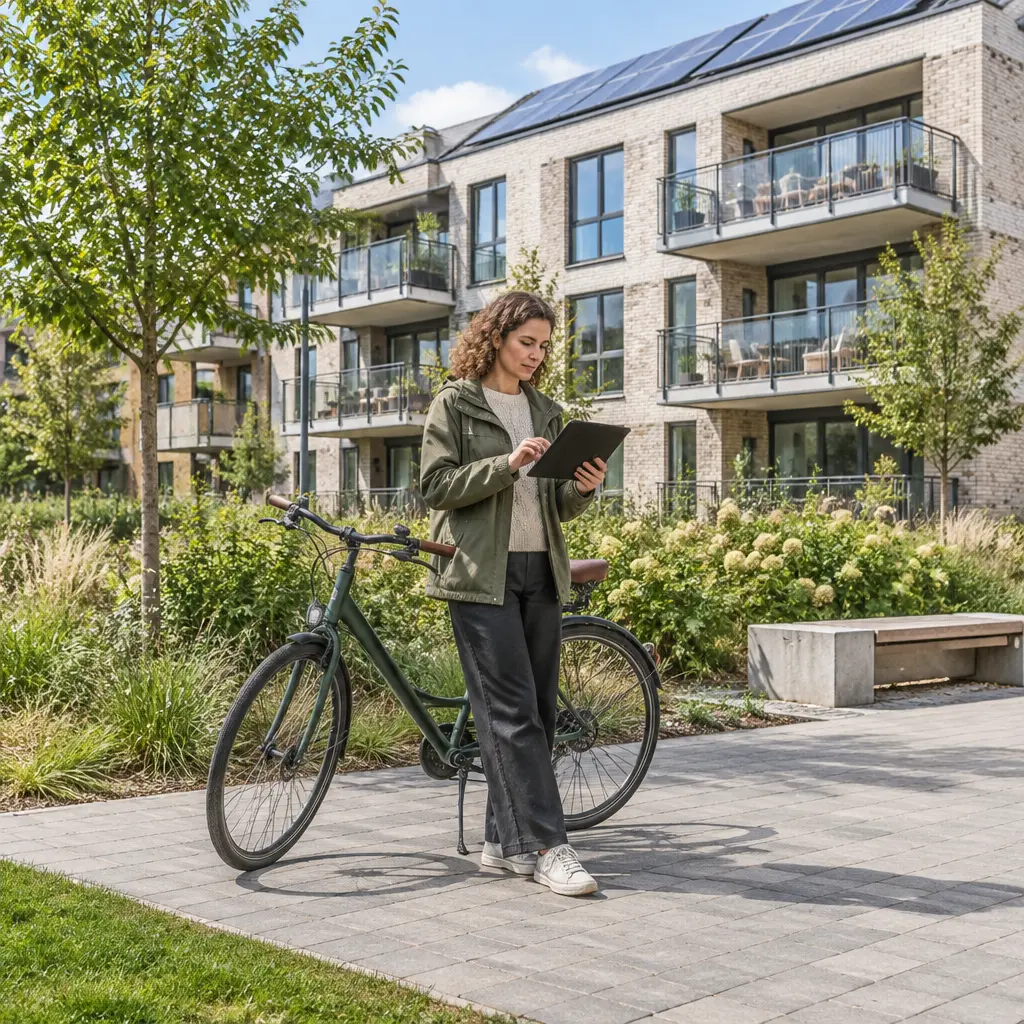
Sustainable apartments are homes designed or operated to use resources more efficiently, reduce environmental impacts, and support healthy, comfortable living. To find one in your city, compare building performance, transit access, utility costs, and verified certifications—not just marketing claims. The U.S. Environmental Protection Agency (EPA) estimates that buildings account for about 30% of global energy-related carbon dioxide emissions, while the U.S. Department of Energy says households can cut energy use through measures such as efficient heating, cooling, lighting, and appliances. A practical search combines reliable directories and local data with questions for landlords, careful lease review, and an assessment of how the neighborhood supports low-carbon living.
Evaluate sustainable apartment features before you search
A sustainable apartment is not defined by one feature. It is better understood as a home whose building, systems, operations, and location reduce resource use and environmental harm while providing a safe and healthy indoor environment. The U.S. Green Building Council (USGBC) describes LEED as a framework for evaluating buildings across areas that include energy, water, materials, indoor environmental quality, and location. These categories offer a useful checklist even when an apartment building has no formal certification.
When comparing options, distinguish measured performance from promises. A listing that says “green” or “eco-friendly” may not provide evidence; look for certification records, utility data, equipment details, and written answers from the property manager. The following features are closely related, but each addresses a different part of a home’s footprint.
Energy efficiency and building performance
Energy efficiency means providing heating, cooling, hot water, lighting, and appliances with less energy while maintaining comfort. Useful features include good insulation, efficient windows, LED lighting, ENERGY STAR appliances, smart controls, and high-efficiency heating and cooling equipment. Ask whether the building has a current ENERGY STAR score, a building energy report, or utility data that can be shared with prospective tenants.
The EPA’s ENERGY STAR program provides tools for assessing and improving building energy performance. In the United States, a score of 50 represents median energy performance among comparable buildings in the program’s rating system; scores of 75 or higher may qualify a building for ENERGY STAR certification if it meets other requirements. A rating is useful evidence, but it does not guarantee that an individual apartment will have low bills: unit size, exposure, occupancy, thermostat settings, and who pays for utilities all matter.
Water efficiency and waste reduction
Water-efficient apartments use less potable water through fixtures and appliances such as low-flow showerheads, faucet aerators, dual-flush or efficient toilets, and high-efficiency dishwashers and washing machines. In drought-prone cities, landscaping that uses native or climate-appropriate plants can also reduce irrigation demand. Ask whether water costs are individually metered, included in rent, or allocated across the building, since billing arrangements affect both transparency and incentives to conserve.
Waste practices are another indicator of how a building is managed. Check whether recycling is convenient, whether the city offers food-scrap collection, and whether the building provides clear instructions for sorting. The EPA’s sustainable materials guidance emphasizes reducing waste and reusing materials before relying on disposal. A recycling room is helpful, but it is not proof of strong overall environmental performance.
Indoor environmental quality and materials
Indoor environmental quality concerns conditions that influence comfort and health, including ventilation, moisture, pollutants, daylight, and noise. During a viewing, look for signs of leaks or mold, ask how ventilation and filters are maintained, and find out whether renovations use low-emitting paints, adhesives, and flooring. If you have asthma, allergies, or chemical sensitivities, ask specific questions about smoking policies, pest control, and maintenance practices.
The World Health Organization identifies indoor air pollution as an important public-health concern, while the EPA notes that indoor pollutant levels can sometimes exceed outdoor levels. These broad findings do not diagnose a particular apartment. They do explain why practical checks—ventilation, moisture control, and a responsive maintenance team—belong alongside energy ratings in a sustainability search.
Use certifications and data to compare sustainable apartments
Certifications and performance data help renters compare buildings using consistent criteria, but they measure different things. LEED evaluates a range of building and location attributes; ENERGY STAR focuses on energy performance; and the International WELL Building Institute’s WELL rating system places particular emphasis on health and well-being. A certification can narrow a search, but renters should still verify the building’s current status and ask how its features affect the specific unit.
Green building certifications
A green building certification is an independent rating or verification system that assesses a building against defined criteria. LEED certification levels—Certified, Silver, Gold, and Platinum—reflect the points a project earns under the applicable rating system. Some multifamily properties also use programs such as Green Globes or local green-building standards. Search the relevant organization’s project directory rather than relying only on a listing’s badge or promotional language.
Certifications are most useful as screening tools. Check the project name, address, certification level, and date, and determine whether the credential applies to the whole building, a particular phase, or only a design commitment. If no credential is available, request comparable evidence, such as energy-use intensity, water-saving measures, commissioning records, or a recent sustainability report.
Utility costs and building energy information
Utility costs turn building performance into a household budget question. Request typical monthly electricity, gas, water, and heating costs for a unit of similar size, and clarify whether the figures are estimates or actual bills. Ask which utilities are included in rent, whether charges are separately metered, and whether the building uses shared heating or cooling. Comparing total housing cost—including utilities and likely transportation spending—can be more informative than comparing rent alone.
Where available, use municipal energy benchmarking portals or building-performance disclosure databases to compare properties. U.S. cities and states have adopted varying benchmarking and disclosure policies, so coverage is not uniform. A missing record does not necessarily mean poor performance; it may mean the property is exempt, the data are unavailable, or the local policy does not cover that building type.
Resilience and climate risks
A sustainable apartment should also be considered in relation to climate hazards and a building’s ability to cope with them. Depending on the city, relevant concerns may include extreme heat, flooding, wildfire smoke, storms, or water shortages. Check official local hazard maps and emergency plans, then ask about cooling during heat events, backup power for essential systems, flood protection, and how management communicates during outages.
The Federal Emergency Management Agency (FEMA) provides flood-risk information, while city and county agencies often publish heat, wildfire, and hazard plans. Risk maps are screening tools, not guarantees about future conditions or insurance coverage. Consider both the apartment and the route to transit, work, schools, and essential services, since neighborhood exposure can affect daily safety and access.
Search for sustainable apartments in your city
Once you know which features matter, combine apartment listings with local government data and independent directories. Search using terms such as “LEED-certified multifamily,” “ENERGY STAR apartment building,” “green affordable housing,” and “efficient rental.” Then verify each promising property rather than assuming the search label is accurate. A city’s housing, planning, energy, or sustainability department may provide building data, renter resources, or lists of certified projects.
Search directories and local public resources
Start with established certification directories, utility efficiency programs, and local energy-disclosure databases. Add housing nonprofits, community development organizations, and affordable-housing agencies to the search, especially if cost is a priority. Some utilities offer rebates or technical assistance to building owners; those programs can point to upgrades, though participation alone does not certify a property as sustainable.
A useful search spreadsheet can record the address, rent, estimated utilities, certification, transit access, building features, and unanswered questions. This makes it easier to compare apartments consistently and spot trade-offs, such as a highly efficient building that is far from frequent transit or a well-located home with unclear utility costs.
Assess transit, walkability, and daily travel
Location is a major part of an apartment’s environmental impact because daily travel can affect household emissions, time, and cost. Check walking distance to frequent transit, grocery stores, health care, parks, and other destinations you use regularly. The U.S. Environmental Protection Agency’s Smart Location Database offers measures related to density, diversity of land uses, street design, and transit access for U.S. locations.
Test the route at the times you would actually travel and consider accessibility, lighting, safe crossings, bike storage, and service frequency. A short distance on a map may still be inconvenient if sidewalks are poor or transit is infrequent. In cities with strong public transportation, a smaller apartment near reliable transit may support lower car dependence than a larger unit in a car-oriented area.
Compare affordability and access
Sustainability should not be treated as a luxury reserved for high-rent buildings. Search affordable-housing providers, inclusionary housing programs, and community land trusts, and ask whether energy upgrades are expected to affect rents or utility charges. Efficient equipment can reduce energy use, but the financial benefit to a tenant depends on lease terms, utility billing, and the rent premium, if any.
For a fair comparison, calculate monthly housing costs as rent plus expected utilities, required fees, and likely transportation expenses. Ask whether income-restricted units have separate application rules and whether the property offers accessible units. City housing agencies and tenant organizations can explain local protections and help identify legitimate affordable listings.
Verify sustainability claims before signing a lease
A promising listing is only the start of due diligence. Ask for specific, verifiable information and review what the lease says about utilities, maintenance, waste services, and building amenities. A property that performs well on paper may still be uncomfortable or costly if equipment is poorly maintained or billing practices are unclear.
Questions to ask the landlord or property manager
- Which utilities are included in rent, and how are shared charges calculated?
- Can you provide typical utility costs for a comparable apartment and the period those figures cover?
- What heating, cooling, water-heating, and ventilation systems serve the unit, and how often are they maintained?
- Does the building have a current third-party certification or published energy-performance data?
- Are recycling and food-scrap collection available, and are instructions provided to residents?
- What is the policy for smoking, pest control, moisture complaints, and repair requests?
- Are bike storage, electric-vehicle charging, or transit passes available, and are there additional fees?
Record answers in writing where possible. If a manager cannot provide exact figures, ask what records are available and how estimates were calculated. Clear, consistent answers are more useful than broad claims about being “green.”
Inspect the unit and review lease terms
During an in-person or virtual viewing, check window operation, drafts, water pressure, visible moisture, ventilation, natural light, and appliance condition. Ask how to report maintenance problems and what response times are typical. Review the lease for utility allocation, submetering, waste requirements, restrictions on window coverings or portable equipment, and any fees for shared services.
Do not assume that a high-efficiency building guarantees low bills or that a certification ensures a particular level of comfort in every unit. Sun exposure, floor level, neighboring units, and individual behavior all influence energy needs. If the lease or utility arrangement is difficult to interpret, consult a local tenant organization or housing authority before committing.
Conclusion: Choose an apartment that works for people and the planet
Finding a sustainable apartment means assessing more than a green label. Compare energy and water performance, indoor environmental quality, verified certifications, climate resilience, transit access, affordability, and the lease’s utility terms. Use city resources and reputable directories to identify candidates, then validate claims with documents, questions, and an in-person inspection. Start by selecting your three highest priorities, checking local building and transit data, and contacting property managers for written details. That approach can help you choose a home that is comfortable, financially manageable, and better aligned with your city’s environmental goals.
Sources: U.S. Environmental Protection Agency, Sources of Greenhouse Gas Emissions, https://www.epa.gov/ghgemissions/sources-greenhouse-gas-emissions; U.S. Green Building Council, LEED Rating System, https://www.usgbc.org/leed; ENERGY STAR, Portfolio Manager Technical Reference: Source Energy, https://www.energystar.gov/buildings/tools-and-resources/portfolio-manager-technical-reference-source-energy; U.S. Environmental Protection Agency, Sustainable Materials Management, https://www.epa.gov/smm; World Health Organization, Household Air Pollution, https://www.who.int/news-room/fact-sheets/detail/household-air-pollution-and-health; International WELL Building Institute, The WELL Building Standard, https://www.wellcertified.com/; U.S. Environmental Protection Agency, Smart Location Database, https://www.epa.gov/smartgrowth/smart-location-mapping; Federal Emergency Management Agency, Flood Map Service Center, https://msc.fema.gov/portal/home.