
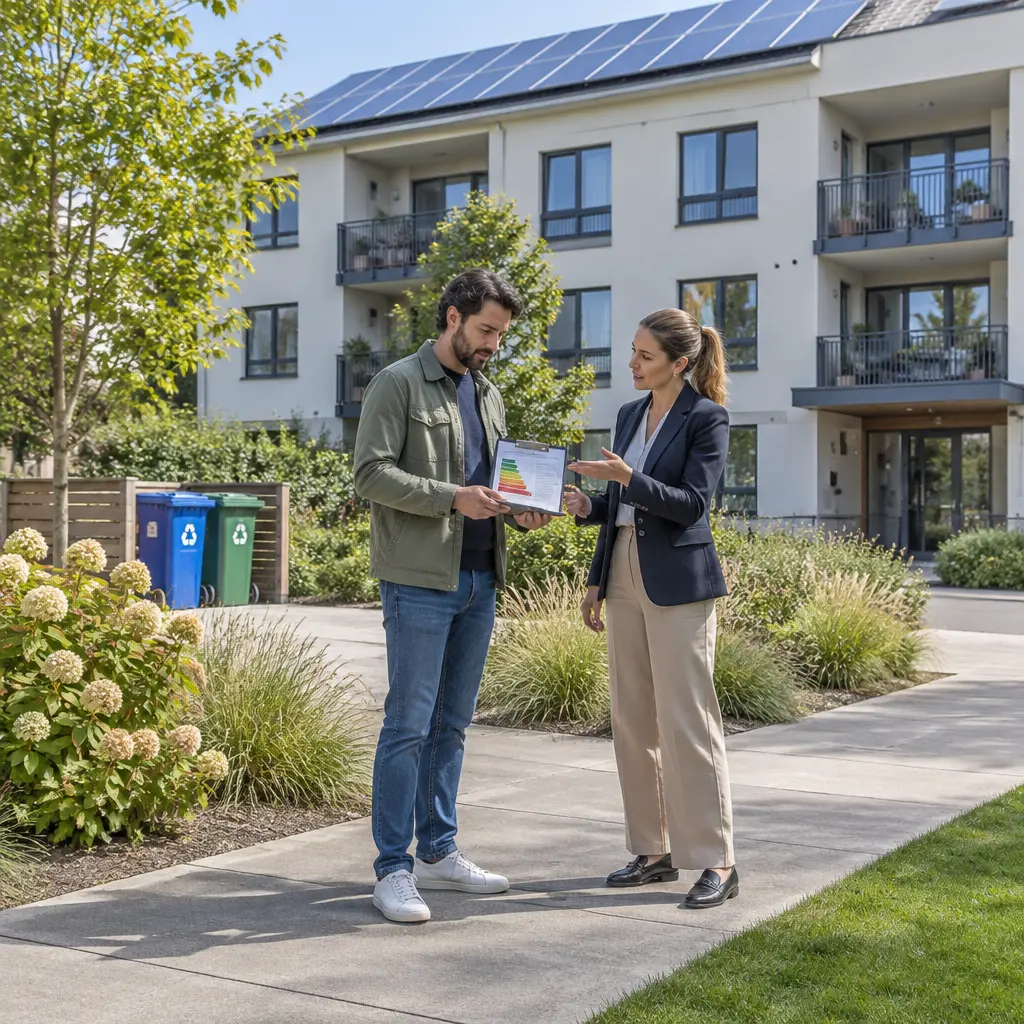
A building’s sustainability describes how its design, construction, and day-to-day operation use resources, affect the environment, and support occupants’ health. When evaluating a rental property, ask the landlord for specific, documented information about energy, water, waste, indoor environmental quality, and building certifications—not just general claims that the property is “green.” These questions matter: the U.S. Energy Information Administration reported that buildings accounted for about 30% of U.S. primary energy consumption in 2022, while the U.S. Environmental Protection Agency estimates that buildings use roughly 13% of the country’s water. The answers can help renters understand likely utility costs, comfort, maintenance practices, and the building’s environmental impact.
Building sustainability questions reveal how a rental performs
Building sustainability is not a single label. It covers measurable features and practices such as energy efficiency, water conservation, waste management, and indoor air quality. The U.S. Green Building Council’s LEED framework, for example, assesses buildings across categories that include energy, water, materials, and indoor environmental quality. For renters, the most useful starting point is to ask what the building measures, what improvements it has made, and whether the landlord can share recent records.
A building may have efficient equipment but still incur high bills because of poor insulation, uncontrolled ventilation, or inefficient shared systems. Conversely, a property without a certification may have practical upgrades that improve performance. Ask for specific evidence and clarify whether the figures apply to the whole building, a common area, or your individual unit.
Ask about building energy use and utility costs
Energy performance describes how much energy a building uses to provide services such as heating, cooling, lighting, and hot water. Ask whether the landlord tracks whole-building energy use, has an ENERGY STAR score or other benchmarking results, and can provide typical utility costs for a comparable unit. The U.S. Environmental Protection Agency’s ENERGY STAR Portfolio Manager is a widely used tool for measuring and tracking building energy and water consumption.
- How are heating, cooling, and hot water supplied, and what fuel do they use?
- Are appliances, lighting, and HVAC equipment energy efficient? When were major systems last upgraded?
- Can you share average monthly utility bills for this unit or a comparable one, including seasonal variation?
- Are energy meters separate for each apartment, or are costs allocated across the building?
- Have you completed an energy audit or efficiency retrofit, and what were the results?
Ask whether quoted costs include only energy used inside the apartment or also shared systems and fees. The U.S. Department of Energy notes that air sealing and insulation can reduce heating and cooling demand; their value depends on the building’s climate, existing condition, and quality of installation. A landlord who can describe recent upgrades and share utility data gives you a stronger basis for estimating comfort and expenses than a general promise of “low bills.”
Ask about water efficiency and leak prevention
Water efficiency is the amount of water needed to deliver services such as showers, toilet flushing, laundry, and landscaping. EPA WaterSense-labeled products are independently certified to meet efficiency and performance criteria. Ask whether the apartment has low-flow showerheads and faucets, efficient toilets, and water-efficient laundry equipment, and whether the landlord monitors consumption or checks for leaks.
- Have toilets, faucets, or pipes had leaks recently, and how quickly are repairs handled?
- Are water bills individually metered or included in rent?
- Does the building use efficient irrigation, native planting, or rainwater management?
- Are there plans to replace older plumbing fixtures or water-heating equipment?
The EPA estimates that leaks in the average household can waste nearly 10,000 gallons of water each year. That estimate is a useful reason to ask about maintenance response times, though it should not be treated as a prediction for a particular apartment. If water is included in rent, ask how the property detects leaks and whether conservation measures apply to common areas as well as individual units.
Building sustainability questions cover materials, waste, and indoor health
Once basic resource use is clear, ask how the landlord manages materials, waste, and the indoor environment. These areas are connected: durable materials can reduce replacement waste, while ventilation and careful product selection can affect indoor air quality. The questions below help distinguish ongoing building practices from one-time features installed during construction.
Ask how the building handles waste and materials
Waste management covers how a property prevents, separates, and disposes of materials from residents, maintenance, and renovation. Ask whether recycling and organics collection are available, where the bins are located, and whether residents receive clear instructions. The EPA’s sustainable materials management approach emphasizes considering a material’s full life cycle, including resource extraction, use, and disposal.
- Which materials can residents recycle, and does the service accept food scraps or other organics?
- Are recycling and waste areas convenient, labeled, and regularly maintained?
- During renovations, does the landlord reuse or recycle materials where practical?
- Are low-emitting paints, adhesives, flooring, or furnishings used in unit upgrades?
A recycling program is most useful when accepted materials and collection arrangements are clear. If the property is undergoing renovation, ask whether work will create dust, how materials are handled, and what steps will protect residents. These questions are especially relevant in older buildings, where renovation work may require additional precautions depending on the building’s age and condition.
Ask about indoor air quality, ventilation, and moisture
Indoor environmental quality includes conditions that affect occupants’ comfort and health, such as ventilation, temperature, humidity, lighting, and exposure to pollutants. The EPA identifies indoor air pollution as an important environmental health concern and notes that indoor pollutant levels can sometimes be higher than outdoor levels. Ask how ventilation works, how filters are maintained, and how the landlord responds to mold, persistent odors, or water intrusion.
- Does the unit have mechanical ventilation, operable windows, or both?
- How often are HVAC filters changed, and who is responsible for changing them?
- What is the process for reporting mold, leaks, condensation, or ventilation problems?
- Are combustion appliances vented outdoors and maintained regularly?
- Have there been known moisture problems or indoor air quality assessments?
A landlord should be able to explain the reporting and repair process without making unsupported health guarantees. If you have asthma, allergies, or another relevant concern, ask whether the property can share maintenance records or accommodate a qualified inspection. The building’s age, climate, and equipment all affect what ventilation and moisture controls are appropriate.
Building sustainability questions verify certifications and resilience
Certifications and climate-readiness measures can provide additional context, but they do not replace questions about a specific apartment’s operating costs and condition. A useful assessment combines documentation, current practices, and the landlord’s plans for maintaining the property over time.
Ask what certifications or performance records are available
A green building certification is a third-party rating or verification based on defined criteria. LEED, administered by the U.S. Green Building Council, is one prominent certification system; ENERGY STAR also provides tools and recognition for qualifying buildings. Ask which certification applies, what level was achieved, when it was awarded, and whether it covers the whole building or only a particular component.
- Does the building hold a current LEED, ENERGY STAR, or other recognized certification?
- Can the landlord provide the certificate, score, or public performance record?
- Was the rating based on design, construction, or measured operation?
- Are energy or water benchmarks updated regularly?
Certification scope matters. A design-stage award may document planned features, while operational ratings can reflect measured performance over time. A score or certificate also may not describe every unit equally, particularly when apartments differ in orientation, equipment, or exposure. Treat certification as supporting evidence rather than a guarantee of low bills or ideal comfort.
Ask about climate resilience and maintenance plans
Climate resilience is a building’s ability to prepare for, withstand, and recover from hazards such as extreme heat, flooding, wildfire smoke, or power interruptions. Ask which risks are relevant to the property and what practical measures are in place. The Federal Emergency Management Agency’s National Risk Index provides county- and census-tract-level information on multiple natural hazards, which can help frame questions but is not a property-specific inspection.
- Has the property experienced flooding, overheating, smoke intrusion, or extended outages?
- Are there backup power systems for elevators, common areas, or essential equipment?
- How does management communicate during severe weather or building emergencies?
- Are roofs, drainage, shade, and cooling systems inspected and maintained regularly?
- Are planned upgrades intended to address local hazards as well as reduce resource use?
A resilience feature is only useful if it is maintained and relevant to local conditions. For example, exterior shading may reduce heat gain, while drainage improvements may help manage heavy rainfall; neither measure alone establishes that a building is protected from every hazard. Ask for the building’s maintenance and emergency procedures, and consult local hazard information where appropriate.
Building sustainability questions are strongest when answers are documented
Before signing a lease, record the landlord’s answers and request available documents, such as recent utility summaries, certification records, equipment details, or written maintenance procedures. Compare unit-specific information where possible, and clarify which utilities are included in rent, individually metered, or allocated by the property. If an answer is unavailable, ask whether the landlord can provide it later and whether the relevant commitment can be added to the lease or written correspondence.
A practical comparison chart can list each building, its reported utility costs, heating and cooling systems, water fixtures, recycling access, ventilation and moisture procedures, certifications, and resilience measures. Keep estimates separate from verified records, and note when information applies to the whole building rather than your unit.
Conclusion: Building sustainability questions support informed renting
Questions about energy use, water efficiency, waste and materials, indoor environmental quality, certifications, and climate resilience help renters evaluate more than a building’s marketing claims. Ask for measurable information, clarify how it applies to your unit, and check whether the landlord has reliable maintenance and emergency procedures. Because buildings account for substantial energy and water use, these conversations matter for household costs, comfort, and broader environmental impacts. Before choosing a rental, use the questions in this guide to compare properties and request records that support the answers.
Sources: U.S. Energy Information Administration, “2022 Energy Consumption by Sector,” https://www.eia.gov/energyexplained/use-of-energy/; U.S. Environmental Protection Agency, “WaterSense: About Us,” https://www.epa.gov/watersense/about-us; U.S. Green Building Council, “LEED rating system,” https://www.usgbc.org/leed; U.S. Environmental Protection Agency, “ENERGY STAR Portfolio Manager,” https://www.energystar.gov/buildings/benchmark; U.S. Department of Energy, “Air Sealing Your Home,” https://www.energy.gov/energysaver/air-sealing-your-home; U.S. Environmental Protection Agency, “Fix a Leak Week,” https://www.epa.gov/watersense/fix-leak-week; U.S. Environmental Protection Agency, “Sustainable Materials Management,” https://www.epa.gov/smm; U.S. Environmental Protection Agency, “Introduction to Indoor Air Quality,” https://www.epa.gov/indoor-air-quality-iaq/introduction-indoor-air-quality; Federal Emergency Management Agency, “National Risk Index,” https://hazards.fema.gov/nri/